
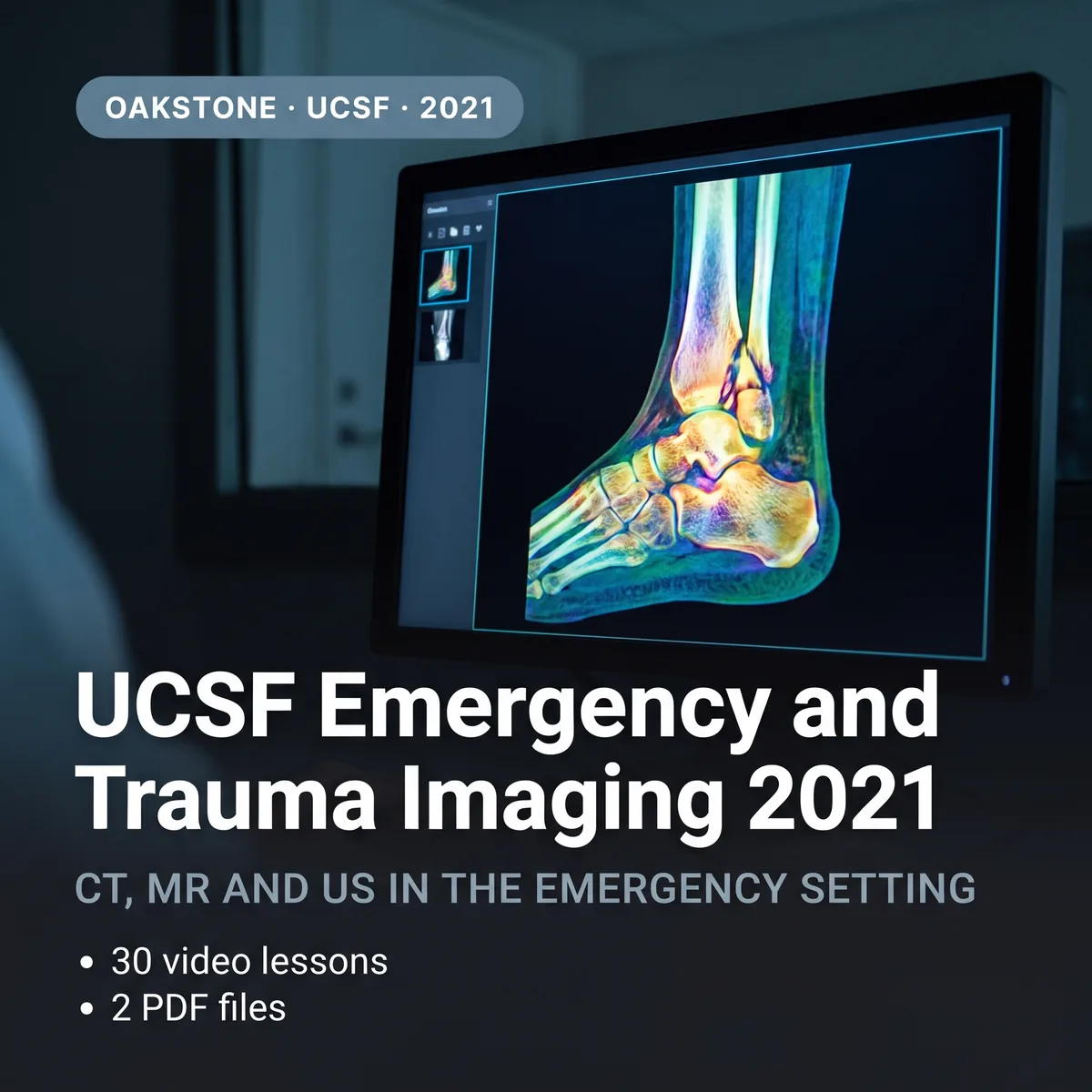
In UCSF Emergency and Trauma Imaging, speakers deliver case-based lectures that highlight imaging features across the major organ systems, as well as the latest imaging techniques increasingly used in the emergency/trauma setting: standard CT, MR, and US, along with dual energy CT, quantitative diffusion imaging, and combined MR/XR imaging for acute stroke care.
What’s included
- 30 video lectures · 2 PDF files
- On-demand streaming access to the recorded sessions
- Self-study material; does not include CME or MOC credit.
What you’ll learn
- Implement the latest imaging protocols and state-of-the art techniques for rapid assessment of complex acute polytrauma patients
- Distinguish between common anatomic variants, injury mimics and common thoracic vascular emergencies including acute aortic injury and pulmonary embolism
- Recognize key imaging features and updated classification systems relevant to the most common emergent brain, spine and head & neck pathologies
- Differentiate between emergent and non-emergent indications for interventional radiology consultation, and understand the role of IR in diagnosis and treatment of common medical emergencies
- Identify the key imaging features of common abdominopelvic pathologies encountered in the emergency and trauma settings
- Utilize search patterns to identify frequently missed musculoskeletal trauma findings
Course contents
- 1. Acute Pelvic Pain in the Non-Gravid Female
- 2. Abdominal Trauma 1 – Hemodynamic Compromise
- 3. Abdominal Trauma 2 – Solid Organ Injury
- 4. Bowel & Mesenteric Trauma
- 5. Genitourinary Trauma
- 6. Scrotal Emergencies
- 7. Imaging of Postpartum Complications
- 8. Thoracic Vascular Trauma
- 9. Pulmonary Embolism
- 10. Common Misses in MSK Trauma
- 11. MSK Trauma Case Review
- 12. Role of Dual Energy CT in Emergency Imaging
- 13. CT Technologist Perspective – Trauma Imaging
- 14. Imaging Infections of the CNS
- 15. Acute Stroke Diagnosis & Management
- 16. Imaging of Time-Critical Neurological Emergencies
- 17. Neuro Trauma – A Neurosurgeon’s Perspective
- 18. Vascular Emergencies of the Head & Neck
- 19. Acute Toxic, Anoxic & Metabolic Abnormalities of the Brain
- 20. Traumatic Brain Injury
- 21. Trauma Surgery Perspective – Solid Organ Pelvic Fracture Management
- 22. Role of IR in a Trauma Center
- 23. Splenic Trauma & Intervention
- 24. Pelvic Trauma & Intervention
- 25. Biopsies Drainages from Hell
- 26. Role of Race & Bias Elements in the IR Trauma Setting
- 27. What is an IR Emergency (and What is it Not)
- 28. Trauma from Diagnosis to Discharge
- 29. Radiology of Ballistics Injury
- 30. Emergency Patients from the Interventional Radiology NP Perspective
Who should attend
- This course is intended for radiologists and all medical professionals who will benefit from a greater understanding of emergency and trauma imaging.

Reviews
There are no reviews yet