
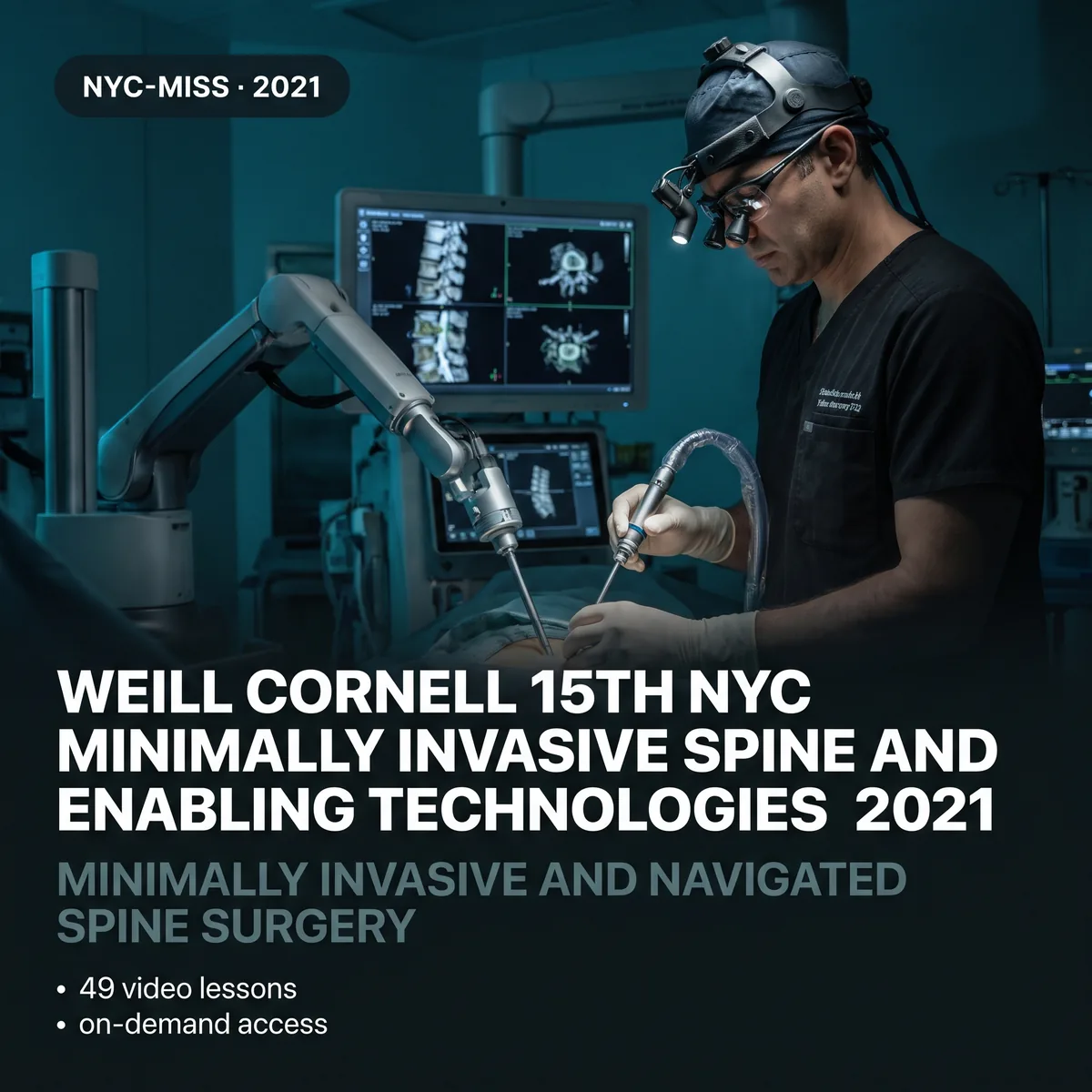
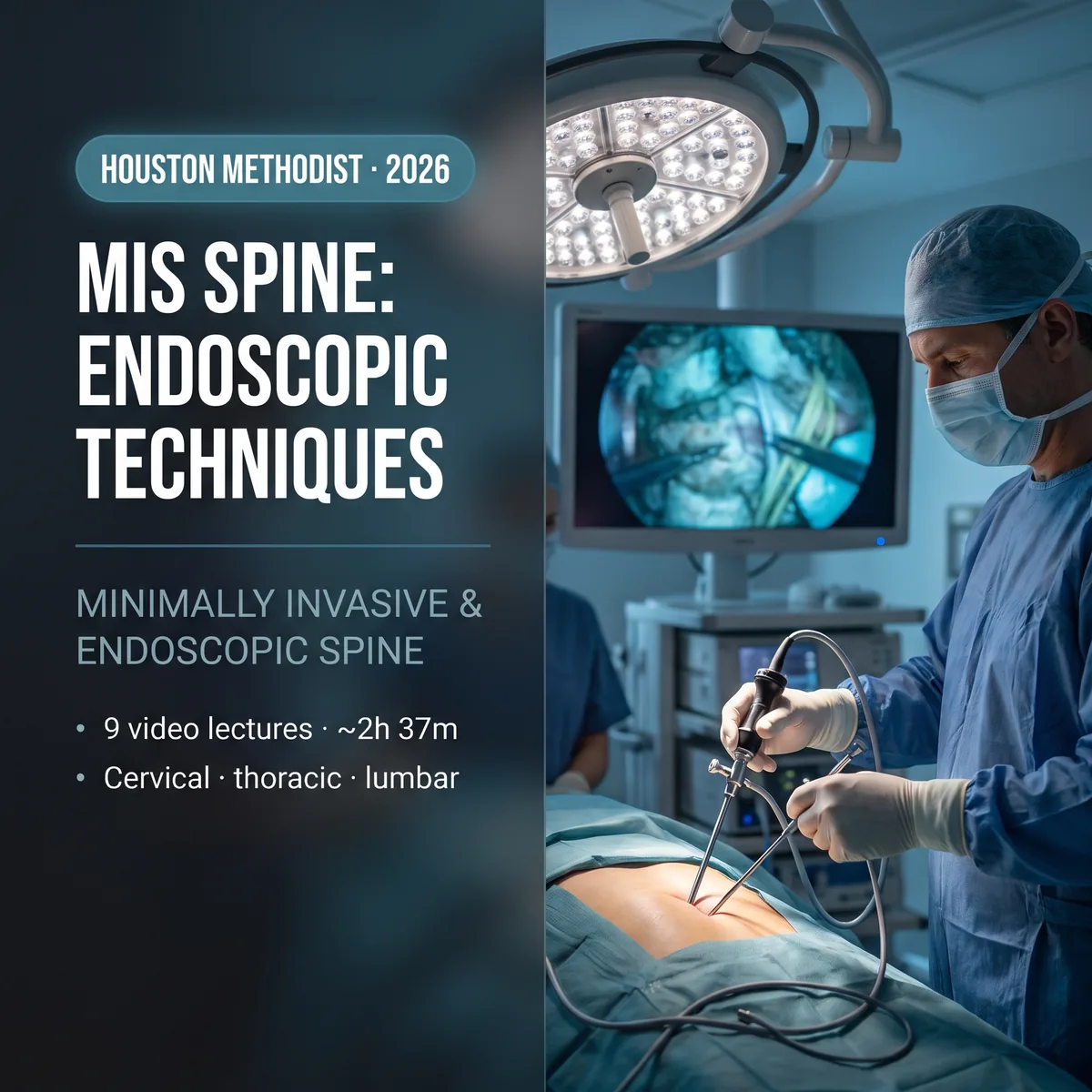
This unique course will provide a comprehensive overview of new and less invasive techniques with and without stereotactic navigation for the operative treatment of spinal disorders.
Proponents and critics of MIS surgery will discuss the pros and cons of MIS approaches, establishing the skills essential in selecting appropriate patients for MIS surgery.
Live spinal surgery demonstrations will allow the participant to watch the latest spinal techniques, including spinal navigation, using state-of-the-art models.
What’s included
- 49 video lectures
- On-demand streaming access to the recorded sessions
- Self-study material; does not include CME or MOC credit.
What you’ll learn
- Identify the spinal and paraspinal structures
- Determine which types of pathology are amenable to minimally invasive spinal surgery
- Be familiar with state-of-the-art minimally invasive surgery used in these approaches
- Recognize the principles of stereotactic spinal navigation and its use for minimally invasive spinal procedures
- Debate on the pros and cons of MIS approaches and selection of patients for MIS surgery
Course contents
- ALIF vs. LLIF How Do I Decide
- AR and MISS New Directions
- AR and Pedicle Screw Placement
- Artificial Intelligence & Spine Current Status and Future Direction
- Cervical Disc Arthroplasty vs. ACDF
- Cervical Laminoplasty Surgical Demonstration
- Cervical MISS Pedicle Screws
- Cervical MISS The Last Frontier – Technology Will Win
- Circumferential MIS for Spinal Deformity Correction
- Disruptive Technology in Spine Education Virtual Reality
- Effectiveness and Cost-Effectiveness of Full Endoscopic Discectomy vs. Microdiscectomy for Sciatica
- Endoscopic Case Presentations and Discussion How I Do It – Part 1
- Endoscopic Case Presentations and Discussion How I Do It – Part 2
- Endoscopic Over the Top Uniportal and Biportal Endoscopy
- Left sided C4 C5 Decompression Posterior Cervical Foraminotomy with a Tubular Retractor
- LLIF (Transpsoas, Direct Lateral Interbody Fusion) in Minimally Invasive Spine Surgery
- Lumbar Endoscopic Fusion Without General Anesthesia Lessons Learned From the First 300 Cases
- Lumbar Interbody Fusion What, When, and Why
- Mini Invasive Anterolateral Fusion at L5S1
- Minimal Invasive Spinal Surgery Assisted by ClarifEye Augmented Reality Navigation in the Hybrid Room
- Minimally Invasive Cervical Spine Surgery Risks at This Time May Outweigh the Benefits
- MIS Far Lateral Discectomy
- MIS for ASD Where Are We Today
- MIS Lateral ACR
- MIS Spine 6T’s and the Curriculum
- MIS TLIF vs. Lateral Pros and Cons
- MIS Unilateral Laminectomy for Bilateral Decompression Techniques
- MIS, Navigation and Augmented Reality Techniques for the Resection of Spinal Tumors
- MISS in Sports
- MISS or Open for Spinal Deformity Correction
- MISS Over the Top Decompression Step By Step
- Missed Opportunities in Robotic Spine Surgery
- Navigation for Deformity in Revision Surgery
- Navigational Assistance in Interbody Device Placement Optimizes Realignment in Adult Spinal Deformity Patients
- PTP Correction and Cases
- PTP Value Proposition
- Research on Radiation-Free Navigation for MIS & Spinal Endoscopy
- Robotic Spine Surgery in 2022
- Single Position MIS 360 Fusion
- Single Stage Single Position Lateral Surgery
- Spinal and 3D Navigation for LLIF Case Presentation
- Techniques for Endoscopic Spinal Procedures Interlaminar Decompression Demo
- TLIF AR Case
- Transforaminal Compared to Interlaminar Access to the Lateral Recess
- Transforaminal Lumbar Interbody Fusion Demo
- Tubular Case Presentations How I Do It!
- Tubular Spinal Surgery Cases Tubular Tumor Resection
- Where Are We With Navigation for Spine Surgery
Who should attend
- This course is intended for local, regional, national, and international practicing neurosurgeons and orthopedic spine surgeons, fellows, and residents in training.


Reviews
There are no reviews yet