
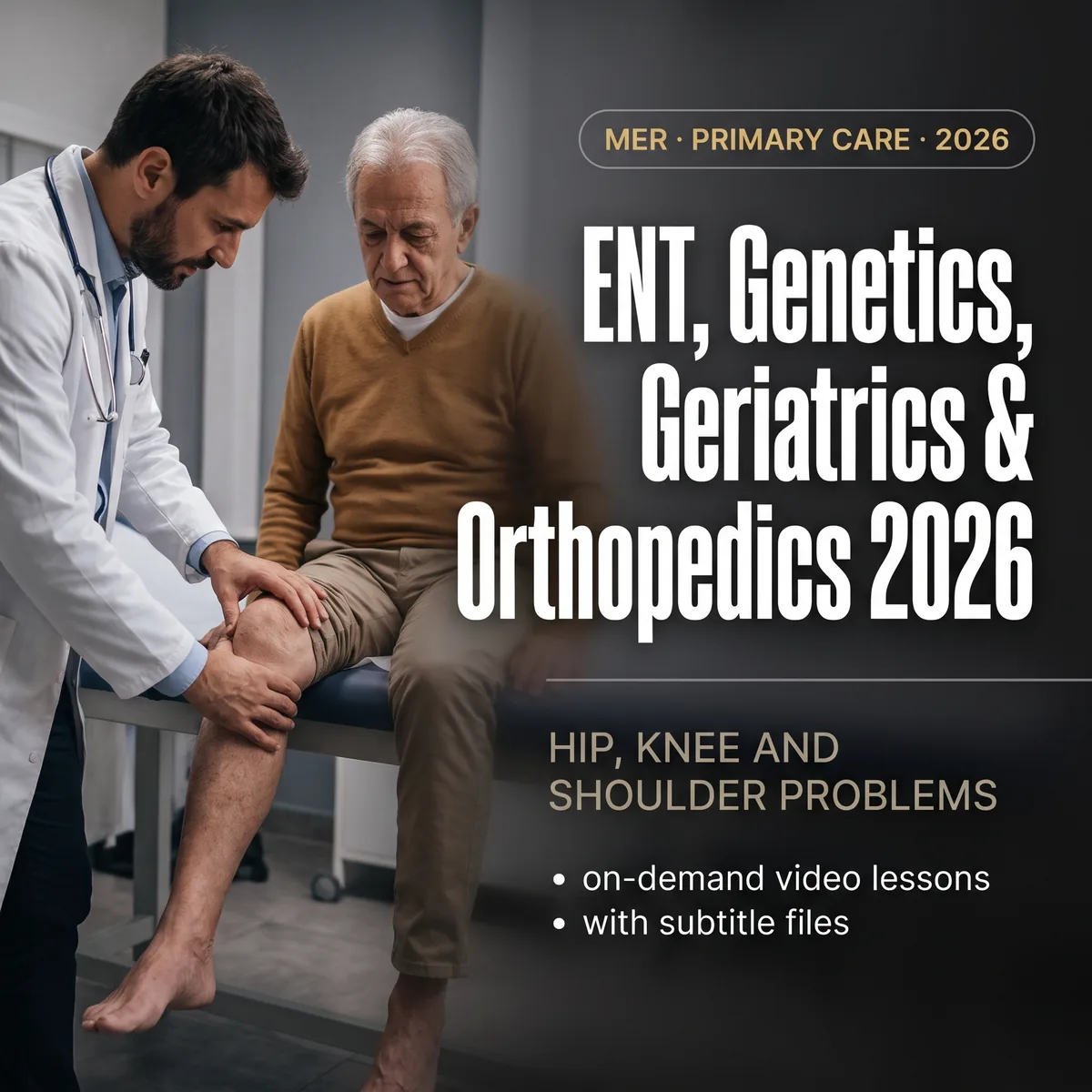
This is a primary care medical conference organized by Medical Education Resources (MER), a non-profit organization.
The conference is titled “Internal Medicine for Primary Care: Ear, Nose, & Throat/Genetics/Geriatrics/Orthopedics”.
What’s included
- 25 video lectures
- On-demand streaming access to the recorded sessions
- Self-study material; does not include CME or MOC credit.
What you’ll learn
- Describe the anatomy and function of the knee joint.
- Diagnose and treat orthopedic problems in the hip, thigh, knee and shoulder.
- Recognize chronic injuries and pain syndromes to the foot and ankle.
- Diagnose and treat shoulder injuries.
- Diagnose and treat wrist, hand, and finger injuries.
- Review common lower urinary tract symptoms (LUTS) that may progress to urinary incontinence, and initiate treatment options.
- Describe the assessment and evidence-based treatment plans for heart failure (both reduced and preserved ejection fraction) in collaboration with cardiology.
- Utilize discussion and case-based learning to further incorporate treatment options for heart failure into practice.
- Evaluate hypertension in both younger and older adults, differentiate risks and goals of treatment, and recommend appropriate interventions.
- Utilize discussion and case-based learning to further incorporate treatment options for hypertension into practice.
- Identify when imaging and/or referral to an ENT is necessary for patients presenting with a neck mass.
- Recommend appropriate systemic and/or topical antimicrobial agents for the treatment of sinusitis.
- Review the basic allergic pathways that affect the body, with particular emphasis on the nasal and sinus regions.
- Accurately differentiation between sensorineural and conductive hearing loss.
- Identify management approaches for tinnitus.
- Identify red flags for heritable conditions that mimic common chronic diseases and understand how adult vs pediatric phenotypes differ.
- Implement genetic counseling with efficient family history collection, informed consent, and communication of risk.
- Distinguish between karyotype, microarray, gene panels, WES, WGS, and mtDNA.
Course contents
Sunday, June 7, 2026
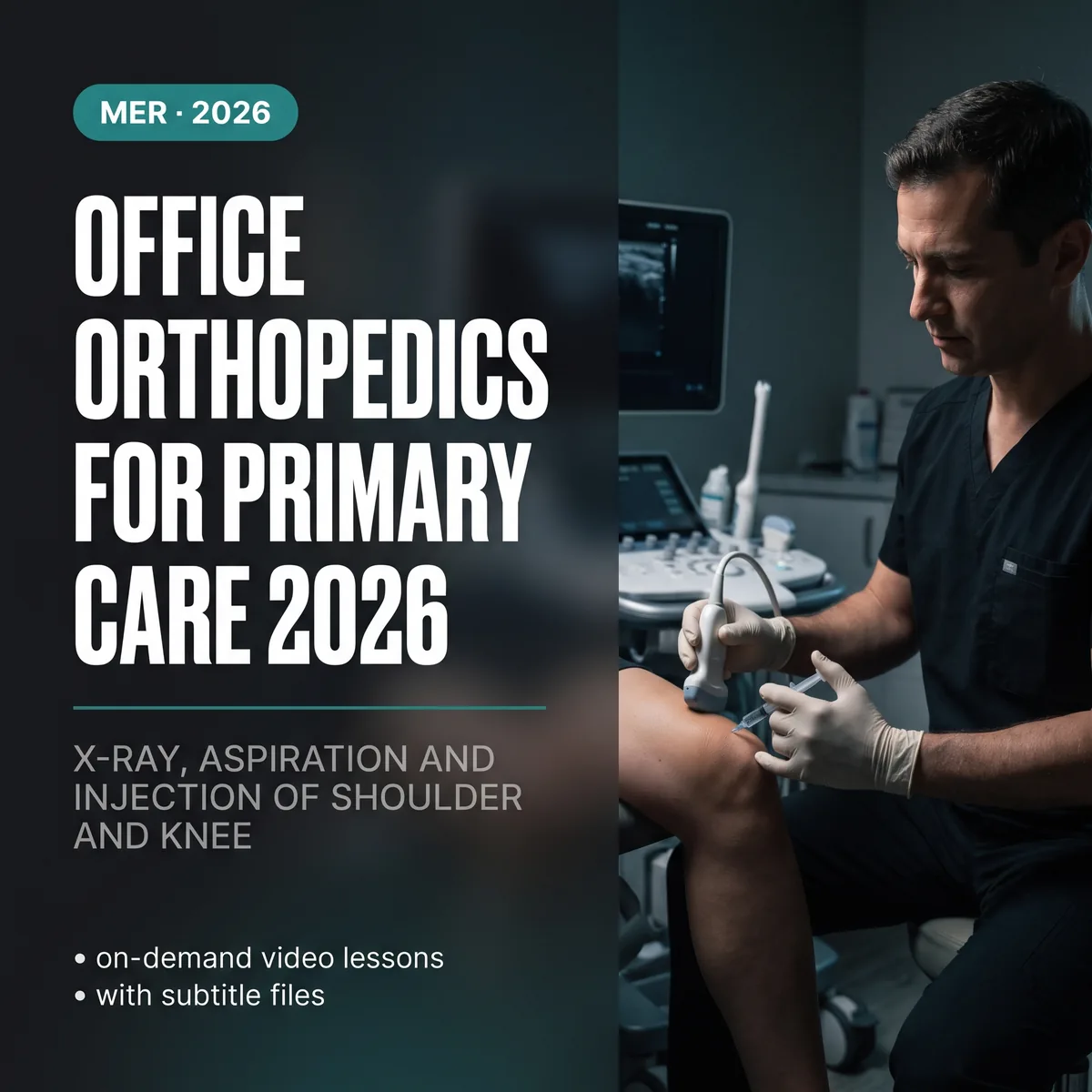
- Orthopedics – The Knee: Anatomy, Common Injuries, and Exam Techniques
- Orthopedics – Hip and Thigh
- Orthopedics – Ankle and Foot
Monday, June 8, 2026
- Geriatrics – Urological Disorders in the Older Adult
- Geriatrics – Heart Failure in Older Adults
- Orthopedics – The Shoulder: Anatomy, Common Injuries, and Exam Techniques
- Orthopedics – Wrist, Hand, and Fingers
Tuesday, June 9, 2026
- ENT – Evaluation of the Neck Mass
- ENT – Antimicrobial Therapy in Treating Sinusitis
- ENT – Allergic Rhinitis
- Geriatrics – Controversies in the Management of Hypertension in Older Adults
Wednesday, June 10, 2026
- Genetics – Recognizing Undiagnosed Genetic Disease in Adults
- Genetics – Practical Genetic Counseling for the Busy Clinician
- Genetics – The Genetic Rosetta Stone: Understanding Test Types and When to Use Them
- ENT – A Primary Care Approach to Sudden Hearing Loss
- ENT – Tinnitus
Thursday, June 11, 2026
- Genetics – Genetic Testing 2.0: Polygenic Risk Scores & Direct-to-Consumer Results
- Genetics – Variants and VUS: Managing Uncertainty in Genetic Results
Who should attend
- This program is targeted to office-based primary care providers and other health professionals with updates in primary care medicine.
- Best for internists, primary care physicians, otolaryngologists (ENT specialists), geneticists, geriatricians, and orthopedists.


Reviews
There are no reviews yet