
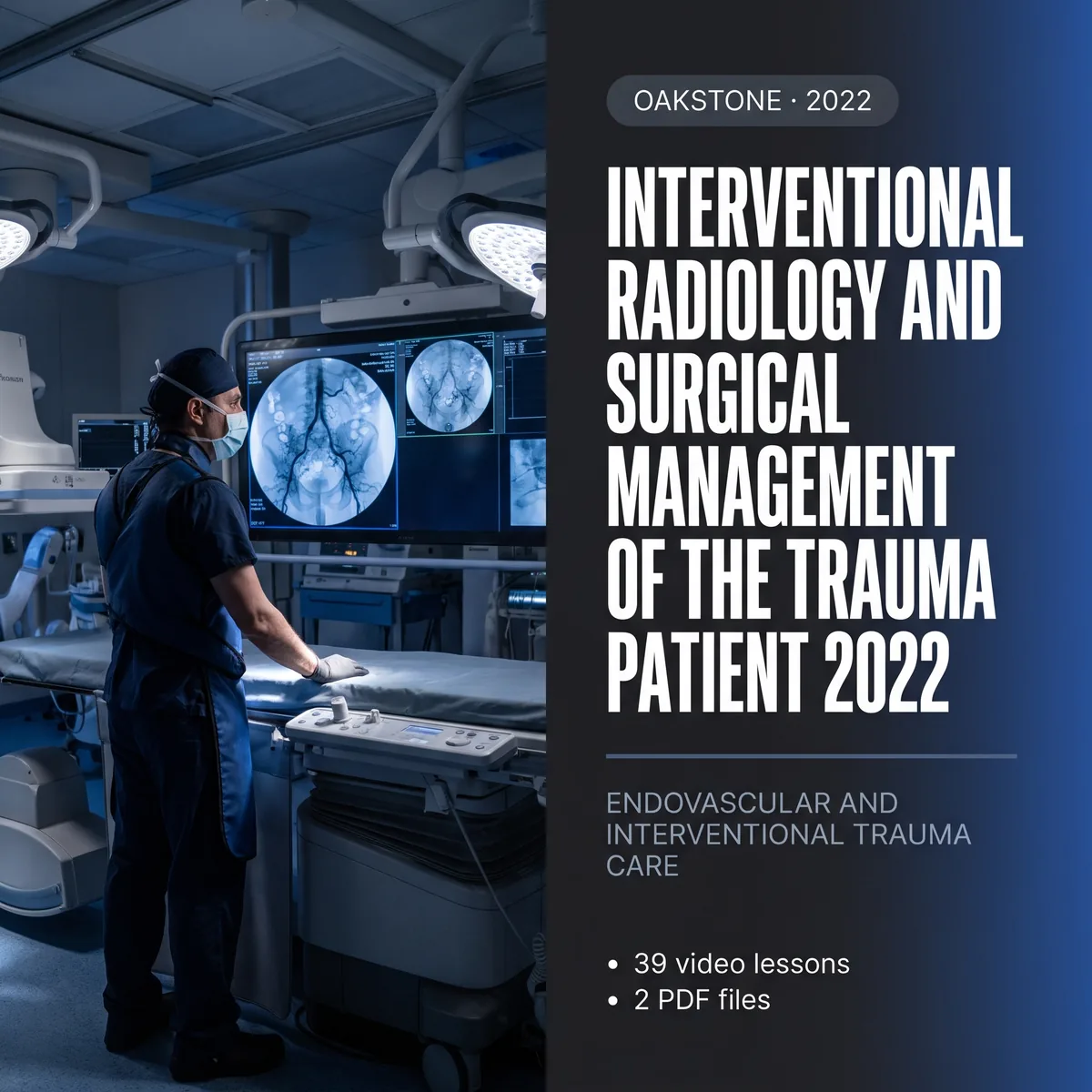
In this online program, internationally recognized leaders present a multi-faceted approach to care of one of the most challenging patients: the critically-ill acute trauma patient.
Interventional Radiology and Surgical Management of the Trauma Patient focuses on current endovascular and interventional techniques and state-of-the art equipment used to perform life-saving procedures by both interventional radiologists and trauma surgeons.
Lectures covering embolization, balloon occlusion, stent and stent-graft placement, and other downstream interventions.
What’s included
- 39 video lectures · 2 PDF files
- On-demand streaming access to the recorded sessions
- Self-study material; does not include CME or MOC credit.
What you’ll learn
- State the appropriate interventional radiology and surgical diagnosis and treatment guidelines for solid organ injuries
- Identify the unique challenges presented by the management of the trauma patient in the ICU
- Discuss how the approach to the pediatric trauma patient differs from the approach to the adult trauma patient
- Identify problems associated with the management of mass casualties
- Describe the nursing and technologist role in the life-saving measures provided to the trauma patient
Course contents
- 1. Let’s Make a Trauma Center – How We Did It
- 2. Fast Exam vs. CT Scan for Blunt Abdominal Trauma
- Hybrid CT vs. Fluoroscopy (4DCT) in the Management of the Trauma Patient
- 4. How to Approach a Positive Blush on CT-Angiography
- 5. Exam Choice, Technique Optimization & Role of CTA in the Unstable Patient
- 6. Resident Case Presentations – Hybrid CT
- 7. Blunt Aortic Injury Repair – Timing & Management
- 8. Stent Grafting for Major Vessel Arterial Injury
- 9. Hemothorax & Intercostal Embolization
- 10. Periperal Arterial Injuries & the Trauma Surgeon
- 11. Traumatic Major Venous Lacerations – Surgical Perspective
- 12. Traumatic Major Venous Lacerations – IR Perspective
- 13. Endovascular Management of Caval Thrombosis
- 14. Resident Case Presentations – Arterial & Venous Injury
- 15. Trauma Care for the VIP Patient
- 16. Interventional Radiology for the VIP Trauma Patient
- 17. November 22, 1963
- 18. Liver & Pancreas Trauma – The Surgical Perspective
- 19. Liver Trauma – The IR Perspective
- 20. Pancreas Trauma – The IR Perspective
- 21. Kidney & Splenic Trauma – The Surgical Perspective
- 22. Kidney & Splenic Trauma – The IR Perspective
- 23. Resident Case Presentations – Solid Organ
- 24. Pelvic Trauma & Hemorrhage Control – The Surgical Perspective
- 25. Pelvic Trauma & Hemorrhage Control – The IR Perspective
- 26. The Surgical Management & Complications of Firearm Injuries
- 27. Resident Case Presentations – Pelvic Trauma
- 28. Daily Dilemmas – Controversies in the World of Trauma
- 29. Surgical Workup & Management of Blunt Carotid & Vertebral Artery Injuries
- 30. Axillary & Subclavian Injury
- 31. IR Management of Subclavian, Axillary & Pulmonary Artery Injuries
- 32. Acute Brain Trauma
- 33. Infections During Trauma – Shock-Critical Illness & the Micrbiome
- 34. Whole Blood Versus Component Therapy
- 35. Reversal of Anticoagulation in the Trauma Patient
- 36. Resident Case Presentations – Axillary Subclavian Injury
- 37. The Use of Medicinal Cannabis in the Treatment of PTSD
- 38. Battlefield Trauma
- 39. Operating a Trauma Center During a Natural Disaster
Who should attend
- This course is designed for interventional radiologists and trauma surgeons as well as other surgical sub-specialties, intensivists, ER physicians, technologists, nurses, and other healthcare professionals who care for critically-ill acute trauma patient.


Reviews
There are no reviews yet