
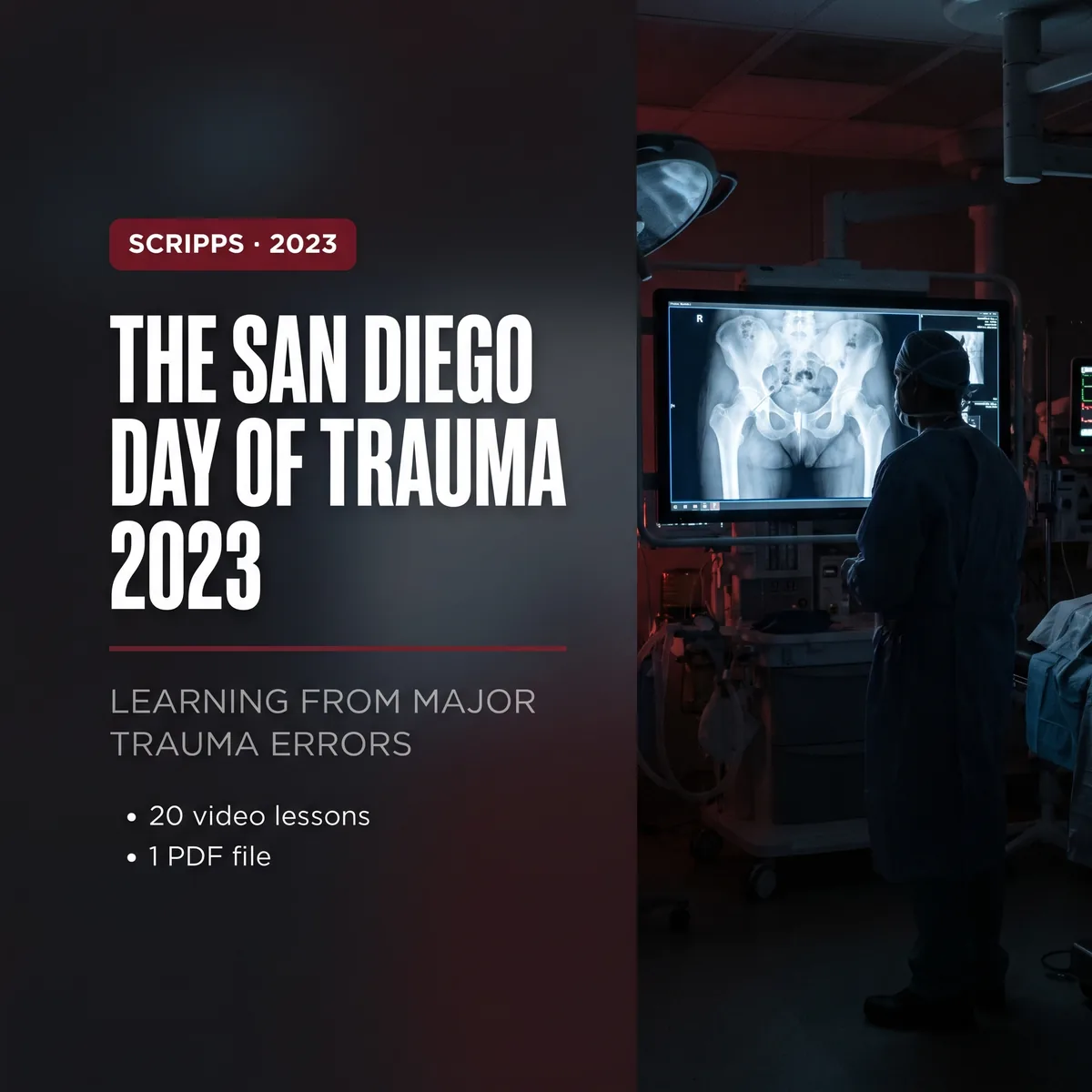
Despite the high degree of organization, practice guidelines and well-developed protocols followed by trauma and acute care surgery professionals, care of critically ill and injured patients remains prone to error.
Analyzing major errors and learning how to prevent them from occurring again in the future is an essential component of improving the safety of trauma and acute care surgery.
Thus, the goal of developing early error recognition and rescue measures to prevent bad outcomes continues to be a top priority for trauma centers.
What’s included
- 20 video lectures · 1 PDF file
- On-demand streaming access to the recorded sessions
- Self-study material; does not include CME or MOC credit.
What you’ll learn
- Review crucial errors and their root causes in the care of critically ill and injured patients.
- Describe the importance of risk assessment to identify errors most likely to occur.
- Recognize errors in progress to prevent their full impact.
- Outline effective interventions to rescue patients following life and limb threatening errors.
- Identify the elements of effective root cause analysis of the error to learn how to prevent similar occurrences.
- Implement practice changes to increase patient safety and mitigate threats to effective care.
Course contents
- Session 1 Necrotizing Fasciitis
- Session 1 Pediatric Mangled Extremity
- Session 1 Severe Pancreatic and Duodenal Injury
- Session 1 Unstable Penetrating Chest Trauma
- Session 2 DEBATE Princess Diana Would Have Survived If Injured in the United States
- Session 3 Airway Emergency Cannot Intubate The Patient
- Session 3 Gunshot Wound with Retroperitoneal Hematoma
- Session 3 Hypotensive Patient with a Smashed Liver
- Session 3 Hypotensive Patient with an Open-book Pelvic Fracture
- Session 4 DEBATE Intracranial Pressure Monitoring Should Always Be Used For Head Injury
- Session 4 KEYNOTE PRESENTATION Lessons From International Trauma and Acute Care Surgery
- Session 6 Lower Extremity Fracture with Vascular Injury
- Session 6 Management of TBI in the Anticoagulated Patient
- Session 6 Saving A Severely Injured Eye Making the Right Decisions
- Session 6 The Cirrhotic Patient with Liver Injury
- Session 7 DEBATE We Should Have Whole Blood Available Pre-hospital
Who should attend
- Trauma Specialists
- Critical Care Specialists
- Emergency Medicine Specialists
- Pre-hospital Personnel
- First Responders


Reviews
There are no reviews yet