
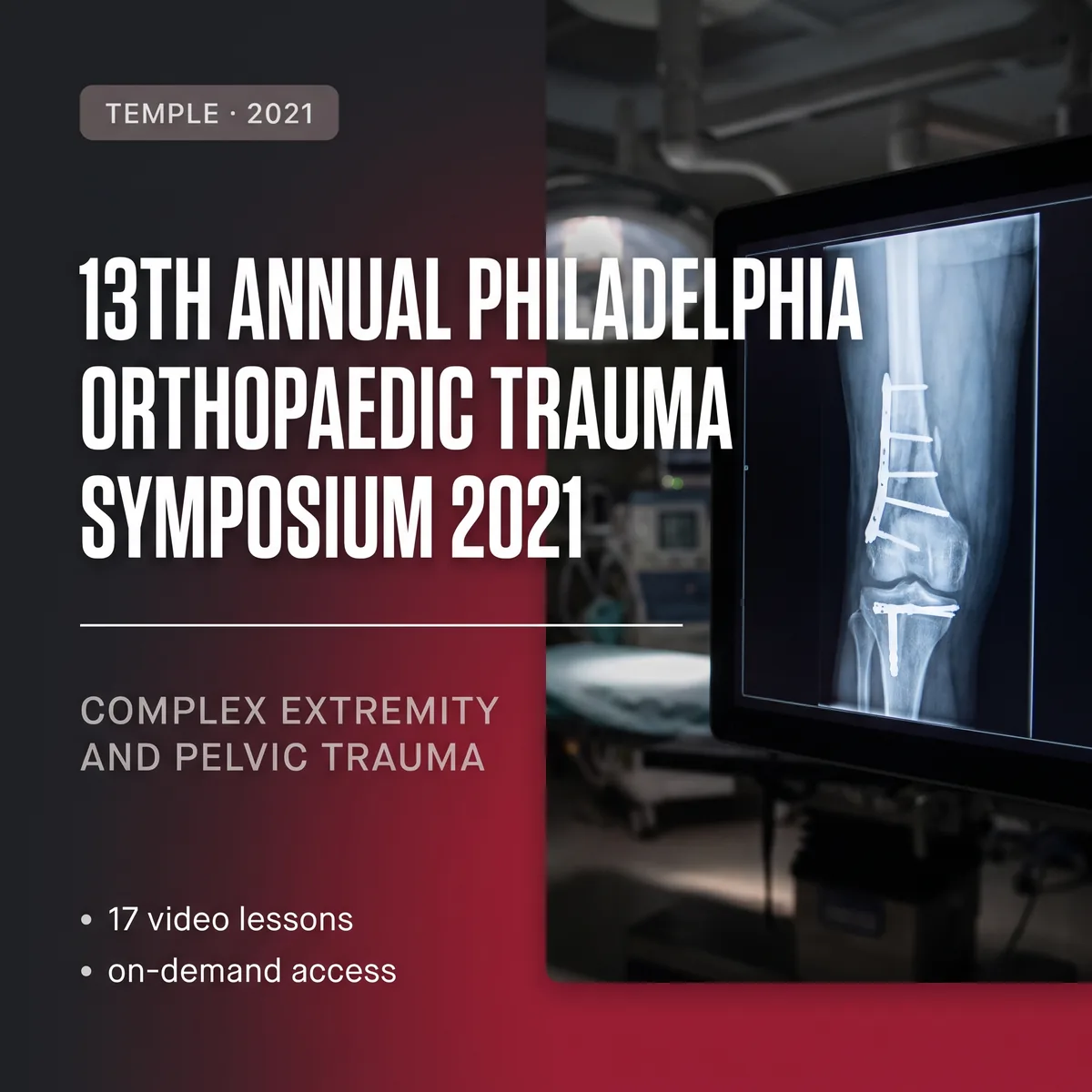
This conference is aimed at practicing orthopaedic surgeons, residents, nurse practitioners, and physician assistants who are involved with management of orthopaedic trauma care.
What’s included
- 17 video lectures
- On-demand streaming access to the recorded sessions
- Self-study material; does not include CME or MOC credit.
What you’ll learn
- Diagnose and treat patients with complex orthopaedic trauma injuries of the upper and lower extremities and the pelvis.
- Identify and critically evaluate infected fractures and their management options.
- Demonstrate competence in decision-making in the management of ballistic injuries of the extremities.
Course contents
- Ballistics Dealing With Contamination, Bone Loss, and Articular Destruction
- Case 23M High Energy MCC with a Distal Femur, Femoral Neck and Patella Fractures
- Case Distal Tibia Fracture in a 45M MCC, Foot Caught on Curb During Low-speed Turn
- Case Tibial Shaft and Plateau Fracture in a 40F after Fall from Ladder
- Case Ulna and Distal Humerus Fracture in a 23yoF High Speed MVC, OSH with Pulseless Right Upper Extremity
- Combined Long Bone and Articular Injury Why It Matters and How to Manage
- Geriatric Pelvis and Acetabulum Fractures Non-operative vs. Percutaneous Fx vs. ORIF vs. THA
- Geriatric Pelvis and Acetabulum Fractures Non-operative vs. Surgical Treatment
- Geriatric Pelvis and Acetabulum Fractures Optimal Management Strategies
- Geriatric Pelvis and Acetabulum Fractures Surgical Fixation of Sacral Fractures
- Proximal Humerus Fractures Fix It or Replace It
- Proximal Humerus Fractures Making Mistakes
- Proximal Humerus Fractures Non-operative Treatment, Deltopectoral vs. Deltoid Split Approach
- Proximal Humerus Fractures Reverse vs. Fixation in the Elderly
- Proximal Humerus Fractures Time to Retire
- The Infected Fracture What to Do and When to Do It
Who should attend
- practicing orthopaedic surgeons
- residents

Reviews
There are no reviews yet